
Can Thieves Delete CCTV Footage by Destroying the Camera?

Security cameras are one of the most common tools used to protect homes, offices, shops, warehouses, and other properties. But what happens when thieves notice a camera and destroy it during a break-in? A common concern is whether breaking a CCTV camera also deletes the footage it has already recorded. In most CCTV systems, destroying […]
How Transmission Lines Work on a PCB
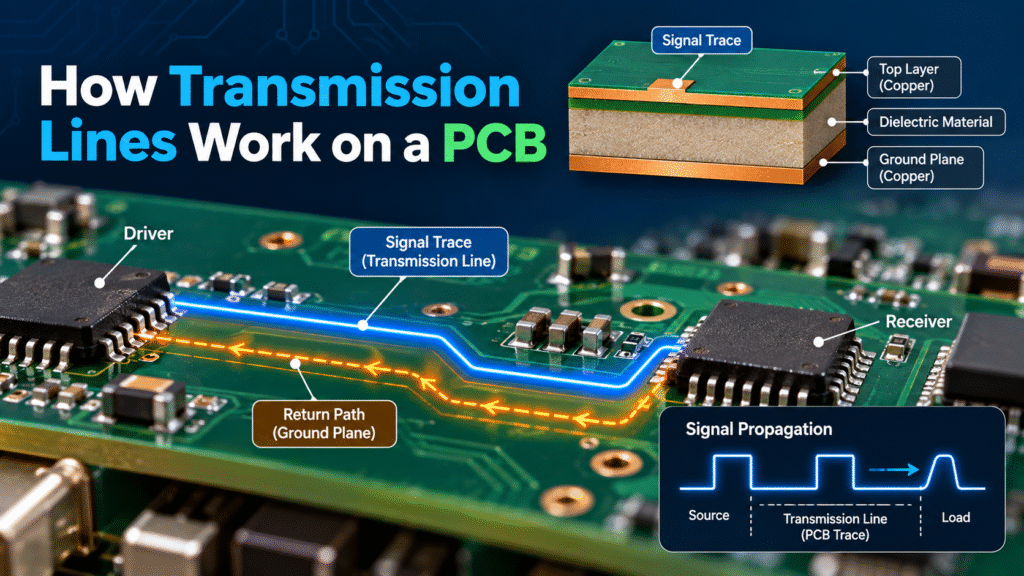
PCB traces may look like simple copper connections between electronic components. However, when signals become fast enough, a trace behaves differently from an ordinary wire. At high frequencies and fast edge rates, the trace acts as a transmission line. Its width, thickness, length, dielectric material, and reference plane can all affect how a signal travels. […]
How Via Design Affects PCB Signal Integrity
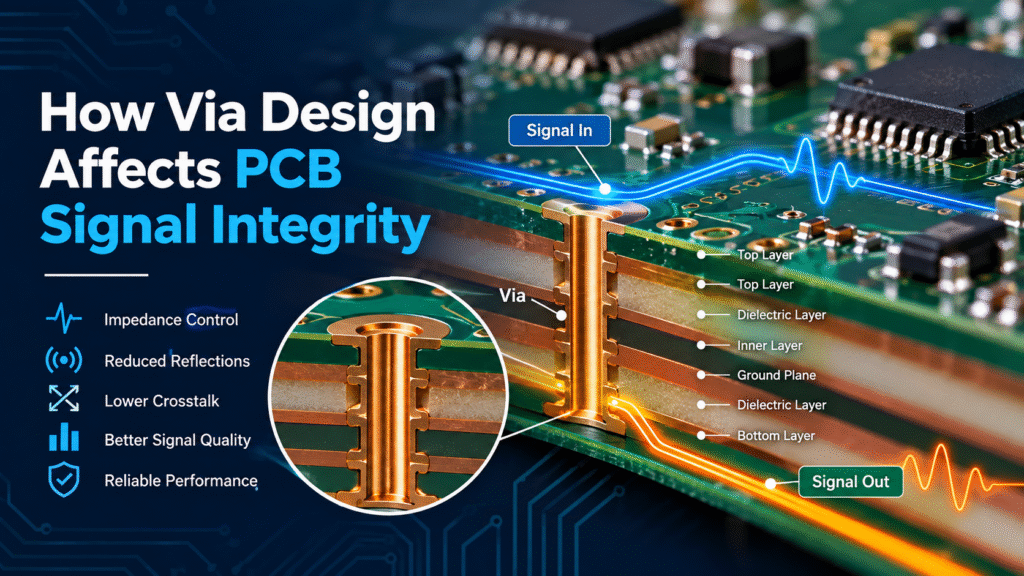
Vias are small structures, but they play a major role in PCB performance. They connect traces between different layers and help route signals through multilayer boards. However, a poorly designed via can affect signal quality. This becomes more important as signal speeds increase. Via design affects impedance, reflections, crosstalk, and signal loss. Therefore, engineers should […]
Electromagnetic Interference in PCB: Causes and Solutions
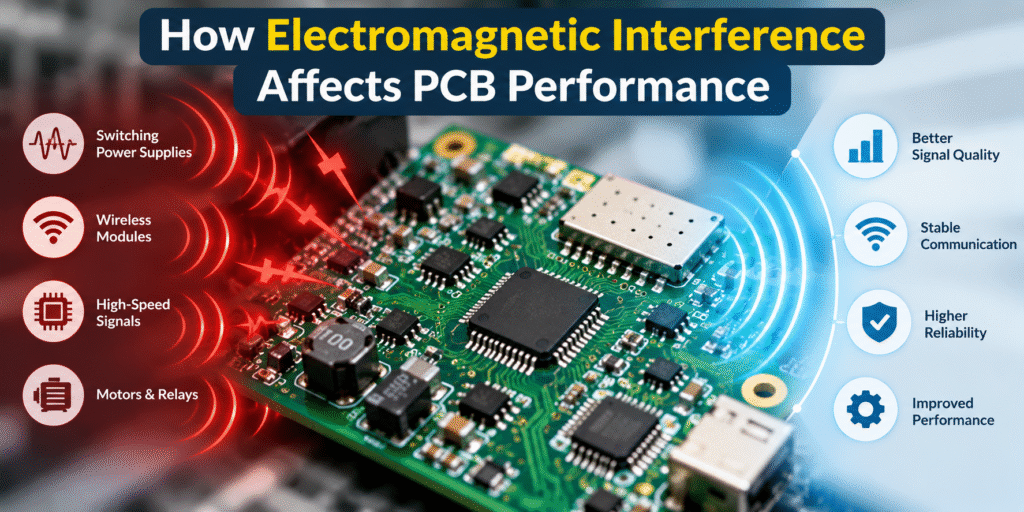
Electronic devices rely on printed circuit boards (PCBs) to connect components and process electrical signals. However, unwanted electromagnetic signals can interfere with these circuits. This problem is known as electromagnetic interference (EMI). It can affect signal quality, communication, device performance, and overall reliability. Therefore, understanding electromagnetic interference in PCB design can help hardware developers build […]
Surface-Mount Technology vs Through-Hole Technology: Key Differences
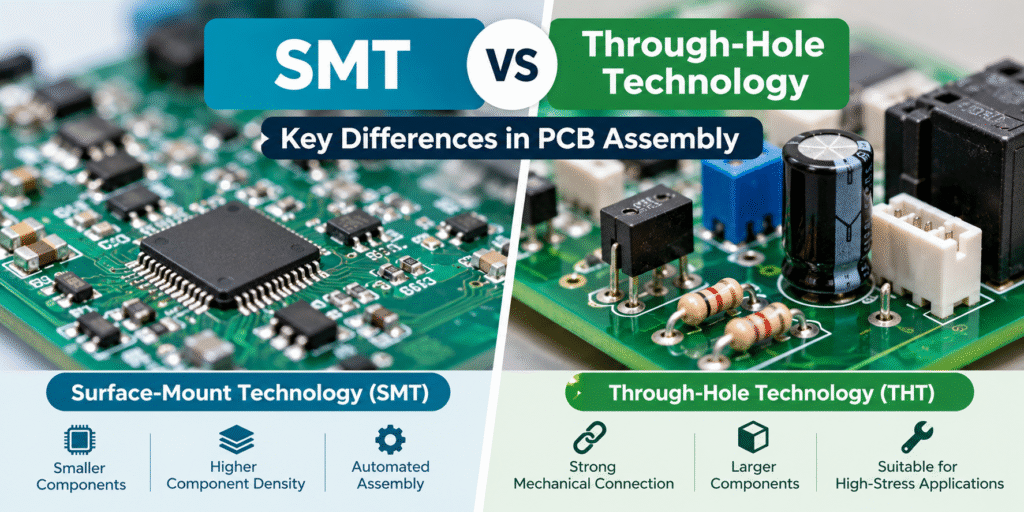
Printed circuit boards (PCBs) power almost every modern electronic device. Manufacturers use different methods to attach components to a PCB. The two common methods are Surface-Mount Technology (SMT) and Through-Hole Technology (THT). Both methods have different strengths. Understanding Surface-Mount Technology vs Through-Hole Technology can help hardware designers choose the right method for their products. What […]
Hardware Security by Design: How to Build More Secure Embedded Devices
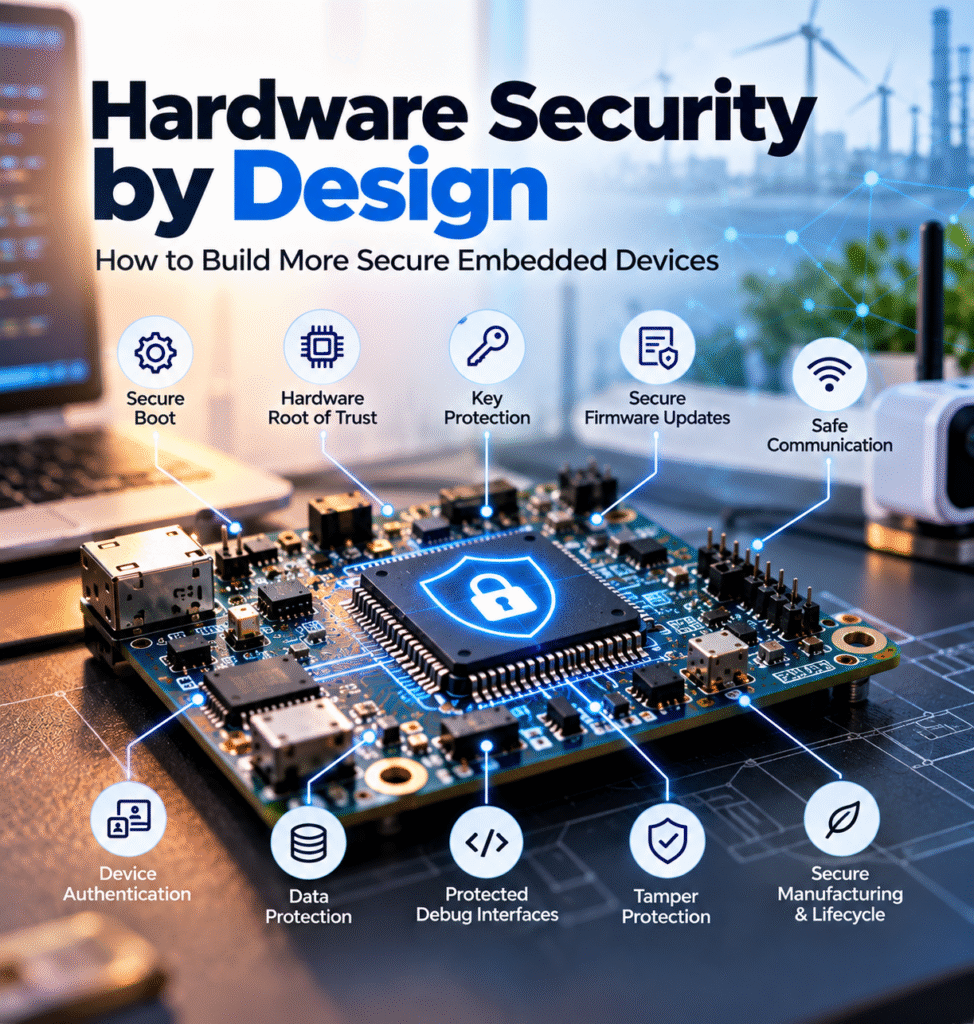
Modern embedded devices do much more than control electronic systems. Today, they collect data, connect to networks, process information, and control physical equipment. As a result, security has become an important part of embedded product development. A security problem in one device can affect user data, device operation, network access, or even an entire connected […]
RTOS vs Bare-Metal Programming: Which Approach Is Right for Embedded Systems?
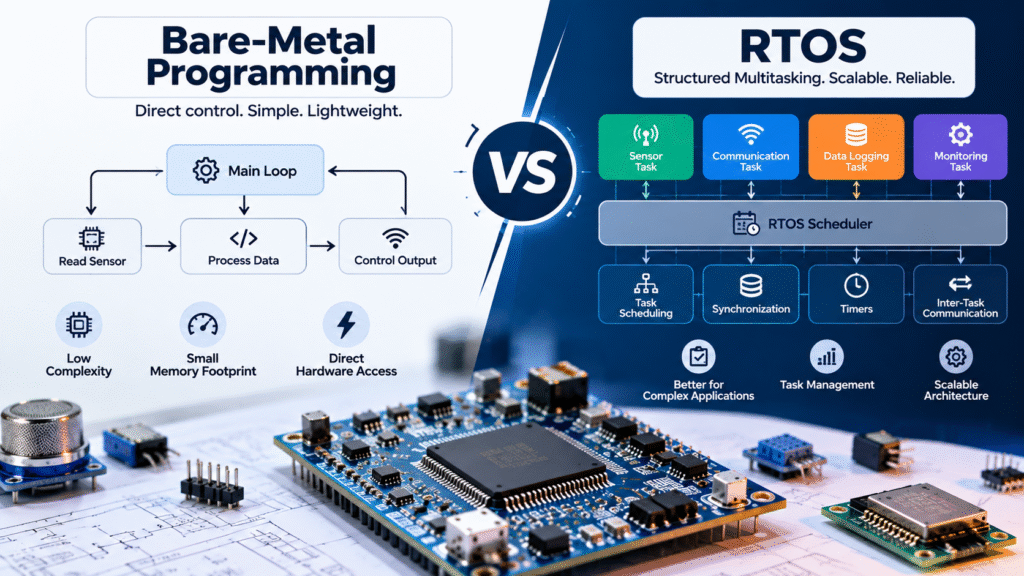
Embedded systems power products that interact with the physical world. From IoT sensors and industrial controllers to smart appliances and medical devices, these systems need firmware that responds quickly and reliably. However, engineers have an important decision to make when developing embedded firmware: Should the system use bare-metal programming or a real-time operating system (RTOS)? […]
Design for Manufacturing: How to Make Hardware Products Production-Ready
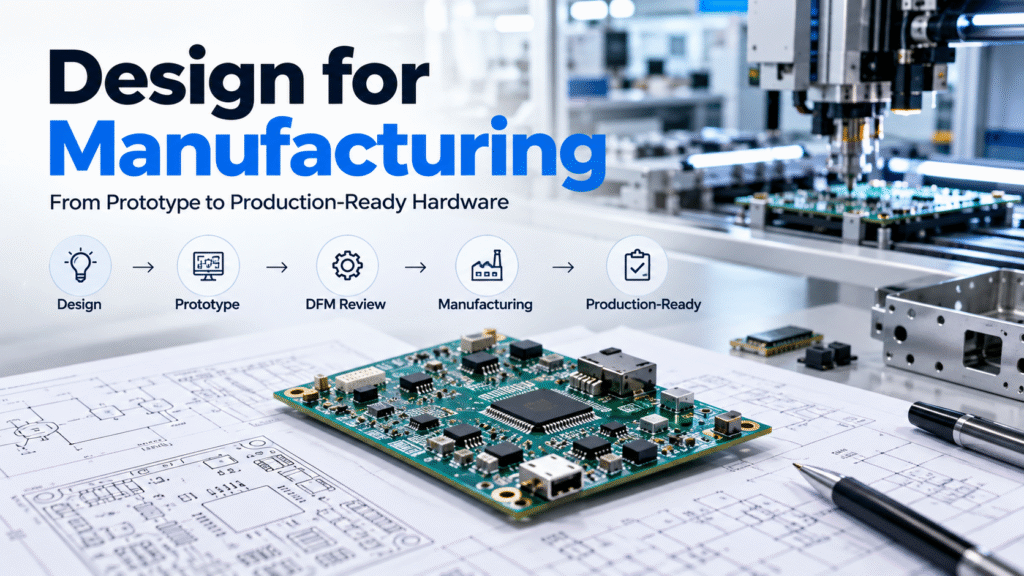
Building a hardware product does not end when the prototype works. Instead, the team must ensure that the product can move smoothly from a working prototype to reliable production. A prototype may perform exactly as expected in the lab. However, the same design may become difficult, expensive, or inconsistent to manufacture at scale. Therefore, Design […]
Designing Low-Power IoT Devices: A Practical Guide to Energy-Efficient Hardware
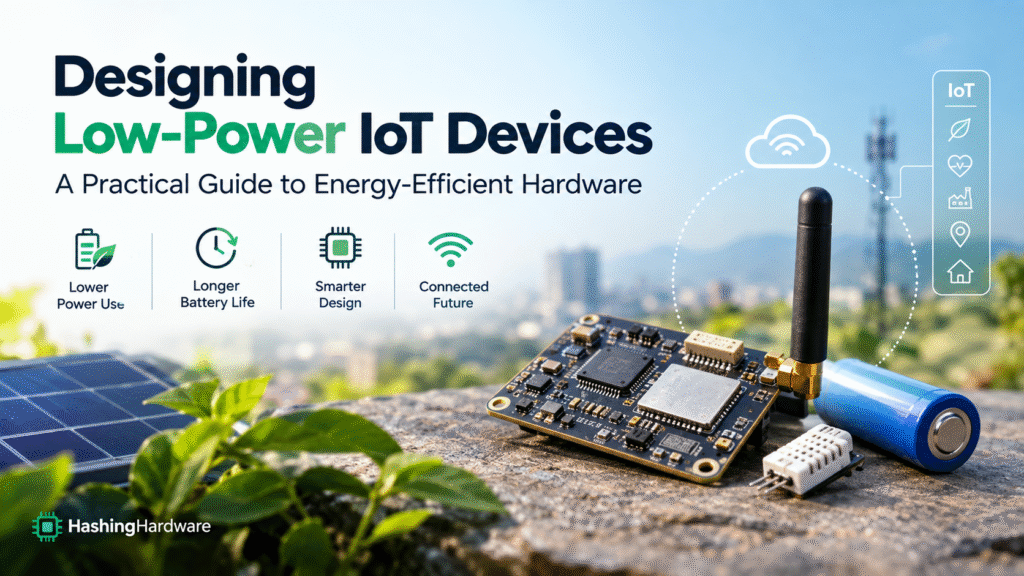
Introduction The growth of the Internet of Things (IoT) has connected billions of devices to homes, factories, healthcare systems, transportation networks, and other environments. Many of these devices need to operate continuously while consuming as little energy as possible. This makes low-power IoT device design an important part of modern hardware engineering. A connected sensor […]
How PCB Design Impacts the Performance of IoT Devices
The performance of an IoT device depends on more than its software and sensors. PCB design for IoT devices plays an important role in determining how efficiently, reliably, and securely a connected product operates. A well-designed printed circuit board (PCB) helps different electronic components communicate effectively while supporting stable power delivery, wireless connectivity, thermal management, […]