
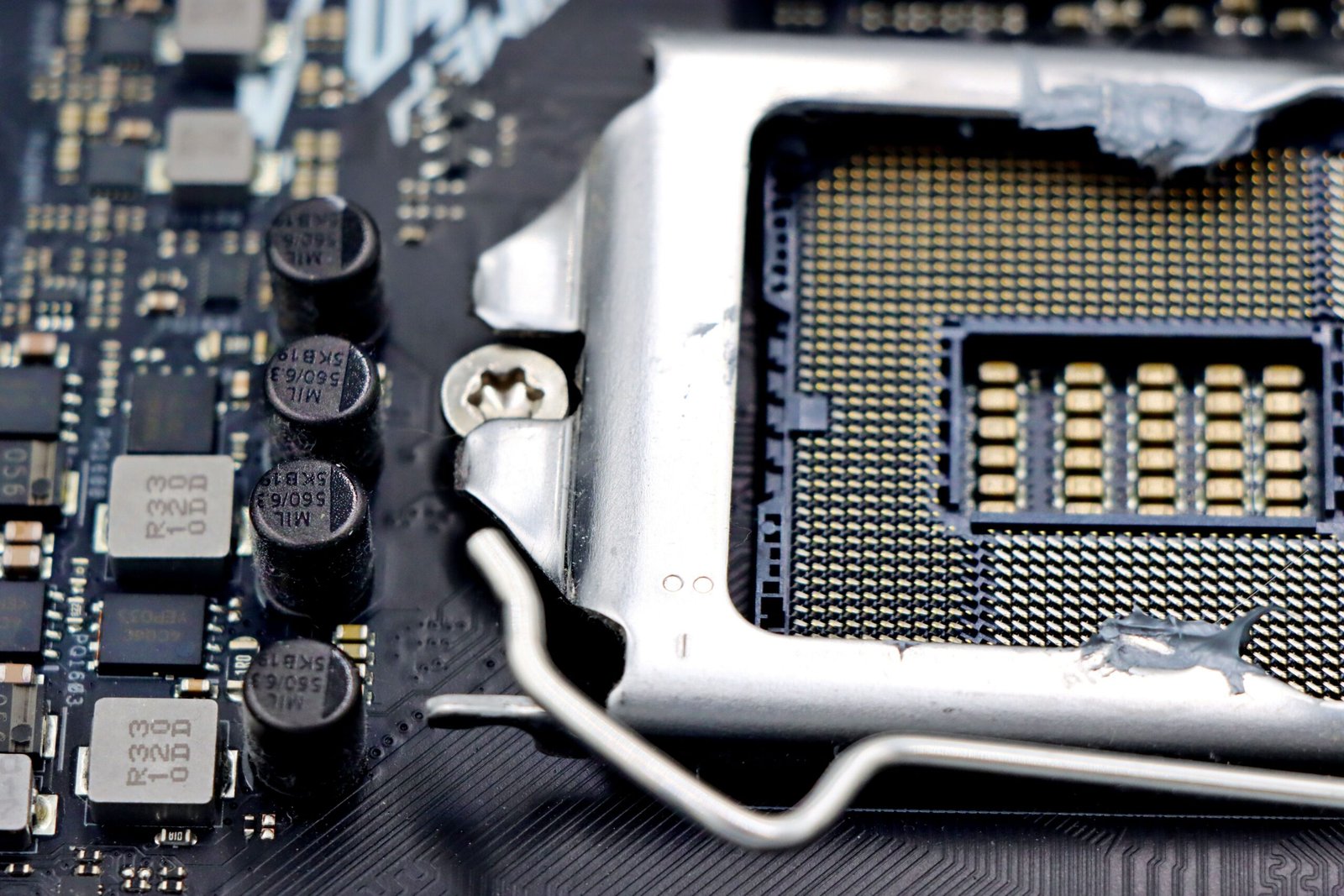
AI motherboard design has quietly become one of the biggest shifts in PC hardware in 2026. The motherboard itself rarely gets the spotlight, but that’s changing. For decades, a motherboard was simply the passive board holding everything together. That is no longer true. Today, AI motherboard design actively shapes how well your CPU’s NPU performs. It affects how stable your system stays under sustained AI workloads. It even shapes how your BIOS tunes itself. Here is exactly how AI is reshaping the board underneath every modern PC.
Why AI Motherboard Design Suddenly Matters
For years, motherboards competed mostly on ports, overclocking headroom, and aesthetics. That competition has shifted hard. The new focus is less visible but far more consequential: how well a board supports sustained AI workloads. As a result, the global motherboard market is projected to reach $16.6 billion in 2026. This growth is driven largely by the shift toward AI-capable hardware. Analysts expect the figure to nearly triple by 2033. NPU integration keeps accelerating refresh cycles.
Power Delivery: The Backbone of Every AI Motherboard
AMD’s Ryzen AI 300 series processors pack up to 50 TOPS of NPU performance. But that number only means anything if the motherboard can sustain it. A board with an inadequate VRM design is no longer just an overclocking concern. It directly limits how long an NPU can run inference tasks before thermal throttling kicks in. Manufacturers have responded by pushing high-end boards toward 20 to 24 VRM phases. That’s well beyond what pure gaming builds typically need.
Bandwidth: Feeding the NPU and GPU at the Same Time
AI motherboard design also depends heavily on raw data bandwidth. An NPU and GPU running simultaneously need a board that can feed both without creating a bottleneck. PCIe 5.0 has become central to this story. It doubles available bandwidth over PCIe 4.0. That gives AI researchers loading large model weights a real, measurable speed advantage, especially when paired with fast NVMe storage.
Looking Ahead: Processing-in-Memory and the Next Bottleneck
Even with faster DDR5 and PCIe 5.0, AI motherboard design still runs into a familiar wall. Moving data between memory and the processor takes time and power, no matter how wide the bus gets. That’s exactly the problem processing-in-memory, or PIM, is designed to solve. PIM performs certain computations directly inside the memory chip. This avoids shuttling data back and forth to the CPU or NPU first. For a deeper look at this emerging approach, see our full breakdown of processing-in-memory (PIM) technology.
What This Means for Workstation-Class Boards
The shift in AI motherboard design is even more pronounced in dedicated AI workstation territory. Boards built for training and fine-tuning local models increasingly require 128GB or 256GB of DDR5 memory. They often need ECC support too. This guards against data corruption during long, unattended training runs. Most standard consumer boards were never built to handle this reliably.
Multi-GPU support has become just as important.
Final Thought
AI motherboard design has turned the most overlooked PC component into one of the most consequential. Power delivery, BIOS intelligence, and raw bandwidth all now get engineered around sustained AI workloads. This is a shift away from short bursts of gaming performance. Whether you’re buying a mainstream board for on-device Copilot features or a workstation platform for local model training, the motherboard in 2026 is doing far more thinking than it ever has before.
AI motherboard design has quietly become one of the biggest shifts in PC hardware in 2026, even though the motherboard itself rarely gets the spotlight. For decades, a motherboard was simply the passive board holding everything together. That is no longer true. Today, AI motherboard design actively shapes how well your CPU’s NPU performs, how stable your system stays under sustained AI workloads, and even how your BIOS tunes itself. Here is exactly how AI is reshaping the board underneath every modern PC.