
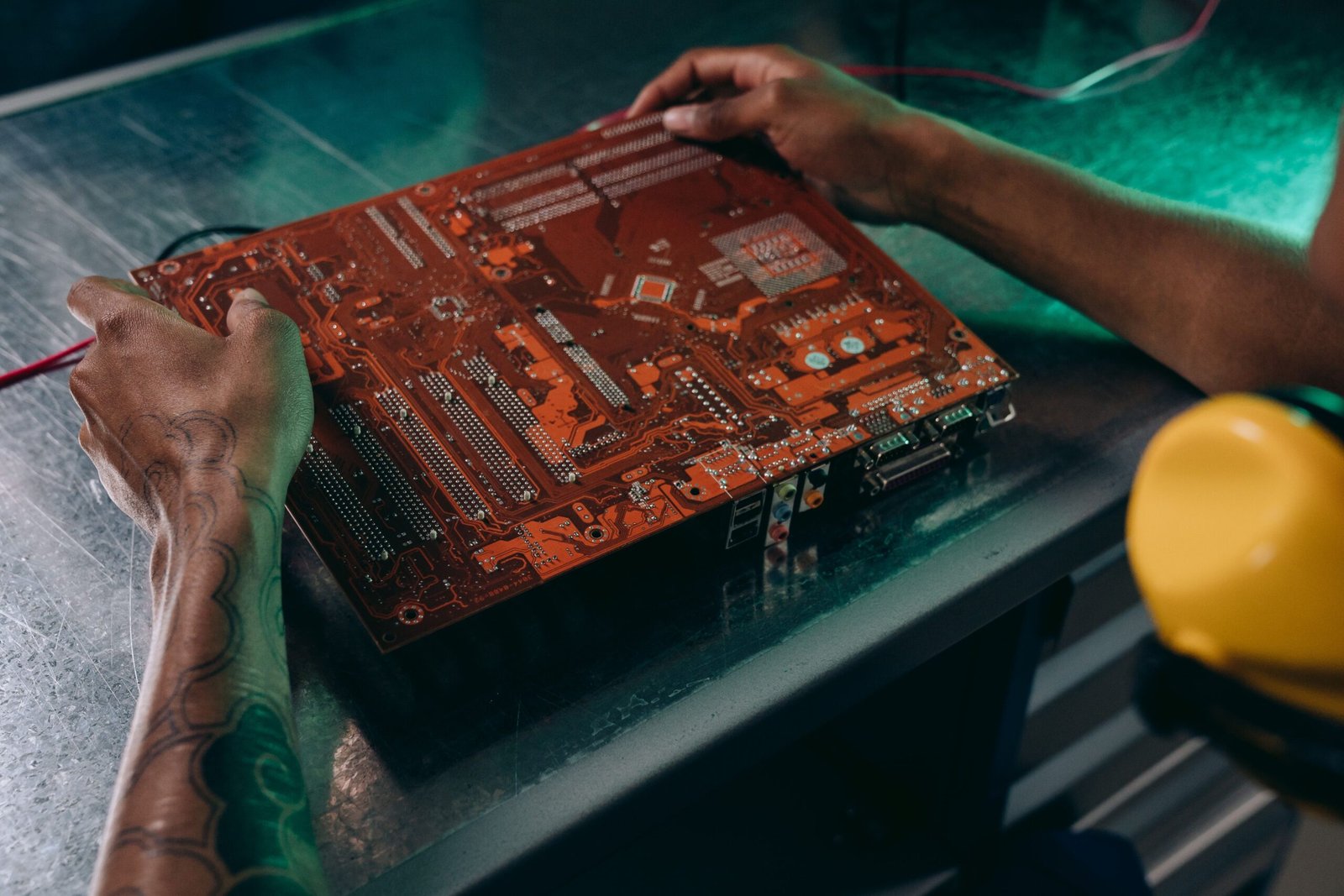
Chip manufacturing without EUV sounds impossible at first. EUV lithography machines print nearly every advanced chip today. Only one company builds them. But real alternatives are emerging in 2026, driven by cost, export restrictions, and simple necessity. Here is what chip manufacturing without EUV actually looks like right now, and how far these alternatives have really come.
Why Chip Manufacturing Without EUV Matters Now
ASML holds a complete monopoly on EUV lithography. The company also controls roughly 83% of the entire lithography market. That concentration creates real risk for the rest of the industry. A single company controlling the most critical chipmaking tool worries governments and manufacturers alike.
Export controls made this risk concrete. EUV systems have never been sold to China, blocked since 2019 under US pressure. Dutch restrictions later expanded to cover advanced DUV tools too. Consequently, Chinese chipmakers had no choice but to pursue chip manufacturing without EUV as a matter of survival, not preference.
DUV Multi-Patterning: The Proven Workaround Chip manufacturing without EUV
The most established form of chip manufacturing without EUV is not new technology at all. It is an old technique pushed harder than ever. Deep ultraviolet, or DUV, immersion lithography can reach down to 7nm and even 5nm through repeated multi-patterning passes.
The cost is steep, though. Reaching 7nm through DUV multi-patterning takes up to 34 separate patterning steps. EUV needs just nine steps for comparable results. Therefore, DUV multi-patterning trades speed and cost efficiency for independence from EUV entirely.
SMIC has proven this approach works at real scale. The company’s third-generation 7nm node reportedly shows a smaller metal pitch than Intel’s 18A process and higher transistor density than TSMC’s N6 node, all without EUV. That result demonstrates chip manufacturing without EUV can produce genuinely competitive chips, even if the process remains slower and more expensive.
China’s Homegrown Lithography Push
China is not just relying on multi-patterning tricks. The country has started building its own lithography hardware entirely. Chinese manufacturers recently began mass production of homegrown immersion DUV machines, with first units already scheduled for delivery to SMIC, Hua Hong, and CXMT.
This matters enormously for long-term independence. Relying on multi-patterning still means importing machines from ASML. Building domestic lithography tools removes that dependency altogether. Meanwhile, Huawei has taken architecture into its own hands too, developing a new chip design called LogicFolding specifically built to work around EUV restrictions rather than through them.
Nanoimprint Lithography: A Different Approach Entirely
Nanoimprint lithography, or NIL, takes a genuinely different path toward chip manufacturing without EUV. Instead of projecting light patterns onto a wafer, NIL physically presses a patterned mold directly into the resist layer. It works more like stamping than photography.
Canon has pushed this technology furthest. Its FPA-1200NZ2C system costs roughly $15 to $20 million per unit, a fraction of EUV’s price tag, while using about 90% less power. The company delivered its first commercial unit to the Texas Institute for Electronics in 2024. However, real limitations remain. Canon’s system manages just 80 to 100 wafers per hour, far below the 195-plus wafers per hour that low-NA EUV systems deliver. Overlay accuracy also lags noticeably behind EUV.
A Chinese startup called Prinano has pushed nanoimprint even further, claiming its process cuts manufacturing costs by roughly 90% compared to traditional DUV-based methods. The company says it can produce photonic chips on 8-inch wafers without any conventional optical lithography at all. Independent verification is still limited, and questions remain around yield rates and production volume at real commercial scale.
Where Chip Manufacturing Without EUV Actually Works Today
None of these alternatives fully replace EUV for the most demanding, cutting-edge logic chips. But they do not need to everywhere. Nanoimprint’s realistic near-term niche sits in repetitive memory patterns, particularly high-layer-count 3D NAND, where its cost advantage can outweigh throughput penalties.
DUV multi-patterning, meanwhile, remains the practical choice for chips that do not need the absolute smallest transistors. Automotive and industrial chips, along with mature-node logic, run comfortably on DUV today. Even TSMC’s most advanced upcoming nodes are not abandoning DUV entirely. The company has confirmed it will not use High-NA EUV for its A16 or A14 nodes, relying instead on low-NA EUV paired with multi-patterning.
The Real Tradeoffs Nobody Skips
Chip manufacturing without EUV is not free. Every alternative approach trades something away. DUV multi-patterning trades speed and cost for independence. Nanoimprint trades throughput and overlay precision for dramatically lower machine cost and power use. Homegrown lithography tools trade performance parity for supply chain control.
These tradeoffs connect directly to a bigger story unfolding across the whole chip industry. Manufacturers everywhere are looking for ways to keep improving performance without relying entirely on the newest, most expensive manufacturing tools. Advanced packaging plays a growing role in that search too. For a closer look at how chipmakers are squeezing more performance out of packaging rather than lithography alone, read our full guide to wafer-level packaging and why it matters more than ever.
Final Thought
Chip manufacturing without EUV is no longer a theoretical workaround. It is a real, active strategy playing out across multiple countries and companies simultaneously. None of these alternatives fully match EUV’s raw capability at the most advanced nodes, and none are likely to anytime soon. Still, DUV multi-patterning, homegrown lithography tools, and nanoimprint technology are proving that meaningful chip production does not have to depend on a single company’s monopoly. Whether driven by cost, geopolitics, or simple necessity, the search for alternatives to EUV is reshaping how the entire semiconductor industry thinks about manufacturing independence.