
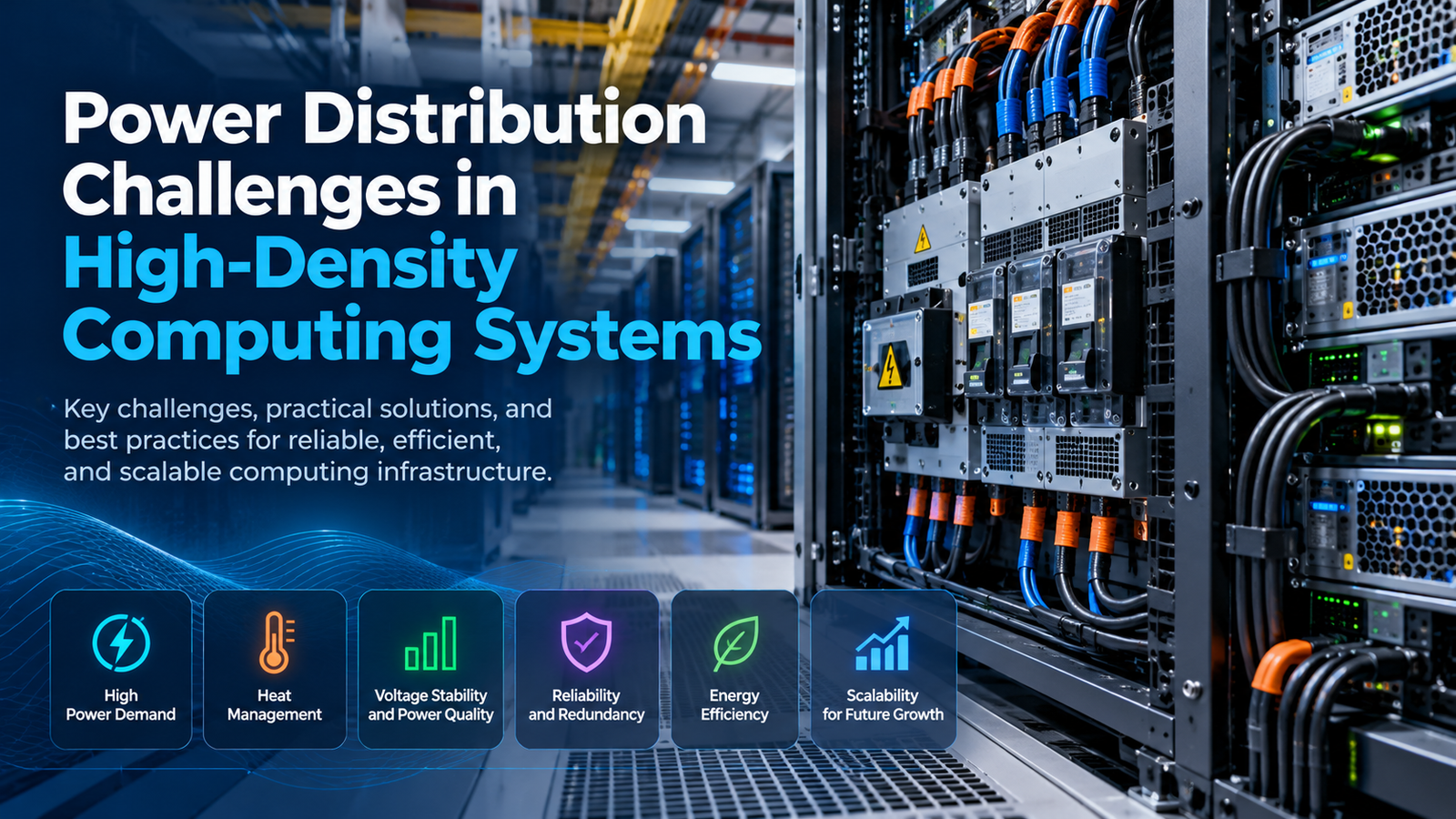
High-density computing systems require significant electrical power to operate AI servers, GPUs, data centers, and other advanced hardware. As computing power increases, delivering electricity safely and efficiently becomes more challenging.
Power distribution in high-density computing systems involves managing electrical loads, maintaining stable voltage, reducing energy losses, and preventing overheating. A well-designed power system helps improve reliability, reduce operating costs, and support future expansion.
In this blog, we explore the major power distribution challenges and how engineers can address them.
What Is Power Distribution in High-Density Computing?
Power distribution is the process of delivering electricity from the main power source to computing equipment.
A typical system includes transformers, UPS systems, power distribution units (PDUs), cables, circuit breakers, and server power supplies.
In high-density environments, multiple power-hungry devices operate within limited space. Therefore, the electrical infrastructure must support higher loads while maintaining safe operating conditions.
Major Power Distribution Challenges
1. High Power Demand
Modern AI servers and GPUs require substantial amounts of electricity. When many devices operate in a single rack, existing electrical infrastructure may not provide sufficient capacity.
Solution: Calculate expected power requirements, evaluate available electrical capacity, and plan for future hardware upgrades before deploying additional equipment.
2. Voltage Drop and Power Losses
Electricity flowing through cables and electrical connections encounters resistance. This can cause voltage drops and energy losses, particularly when current levels are high.
Solution: Use appropriately sized cables, optimize cable routes, select suitable distribution voltages, and inspect electrical connections regularly.
3. Heat Generation and Cooling
Electrical components generate heat during operation. High current, overloaded circuits, and poor connections can increase temperatures. Meanwhile, computing equipment also produces significant heat.
Solution: Use correctly rated electrical components, maintain adequate airflow, monitor temperatures, and coordinate power distribution with cooling system design.
4. Power Quality and Voltage Stability
Voltage fluctuations, electrical transients, and harmonic distortion can affect sensitive computing equipment. Rapid changes in computing workloads can also place additional demands on power delivery systems.
Solution: Install suitable monitoring equipment, select appropriate power supplies, and test the distribution system under realistic operating conditions.
5. Rack-Level Power Limitations
Power distribution units must support the electrical requirements of connected servers. Insufficient circuit capacity, unsuitable connectors, and uneven phase loading can create operational problems.
Solution: Select appropriately rated PDUs, balance three-phase loads, monitor power consumption, and verify that every component supports the expected load.
6. Reliability and Power Failures
Power interruptions can disrupt computing operations and cause service downtime. Backup systems also require regular testing and maintenance.
Solution: Use suitable UPS systems, backup generators, redundant power paths, and preventive maintenance procedures based on the facility’s reliability requirements.
7. Energy Costs and Scalability
Inefficient power distribution increases operating costs. Furthermore, infrastructure designed for current hardware may not support future computing requirements.
Solution: Monitor energy consumption, use efficient electrical equipment, plan modular upgrades, and assess future power demand before expanding the facility.
Best Practices for Efficient Power Distribution
Organizations can improve power distribution by following these practices:
- Calculate electrical requirements accurately.
- Choose suitable cables, connectors, and distribution equipment.
- Reduce unnecessary electrical losses.
- Integrate power and cooling plans.
- Monitor power consumption and equipment temperatures.
- Implement appropriate backup and redundancy systems.
- Schedule regular inspections and maintenance.
- Design infrastructure to support future computing demands.
These measures help maintain stable power delivery while improving operational efficiency.
Future Trends in Power Distribution
High-density computing is driving the development of more advanced power distribution solutions.
Higher-voltage distribution can reduce current and resistive losses for a given power requirement, although it introduces additional safety and equipment-design considerations.
Advanced DC power architectures are also being explored for AI infrastructure. Depending on the design, they may reduce certain conversion losses.
Meanwhile, intelligent power monitoring helps operators identify unusual consumption patterns, detect potential faults, and improve energy management.
As computing density increases, integrating electrical infrastructure with cooling and facility planning will become increasingly important.
Conclusion
Power distribution challenges in high-density computing systems include high electricity demand, voltage drop, heat generation, power quality, reliability, and future scalability.
Addressing these challenges requires careful electrical planning, efficient equipment, effective cooling, continuous monitoring, and appropriate maintenance.
Efficient power distribution is essential for reliable, energy-conscious, and scalable computing infrastructure. By planning electrical systems alongside hardware requirements, organizations can improve performance and prepare for future computing demands.
At Hashing Hardware, understanding the relationship between electrical infrastructure and hardware performance helps support the development of reliable computing solutions.