
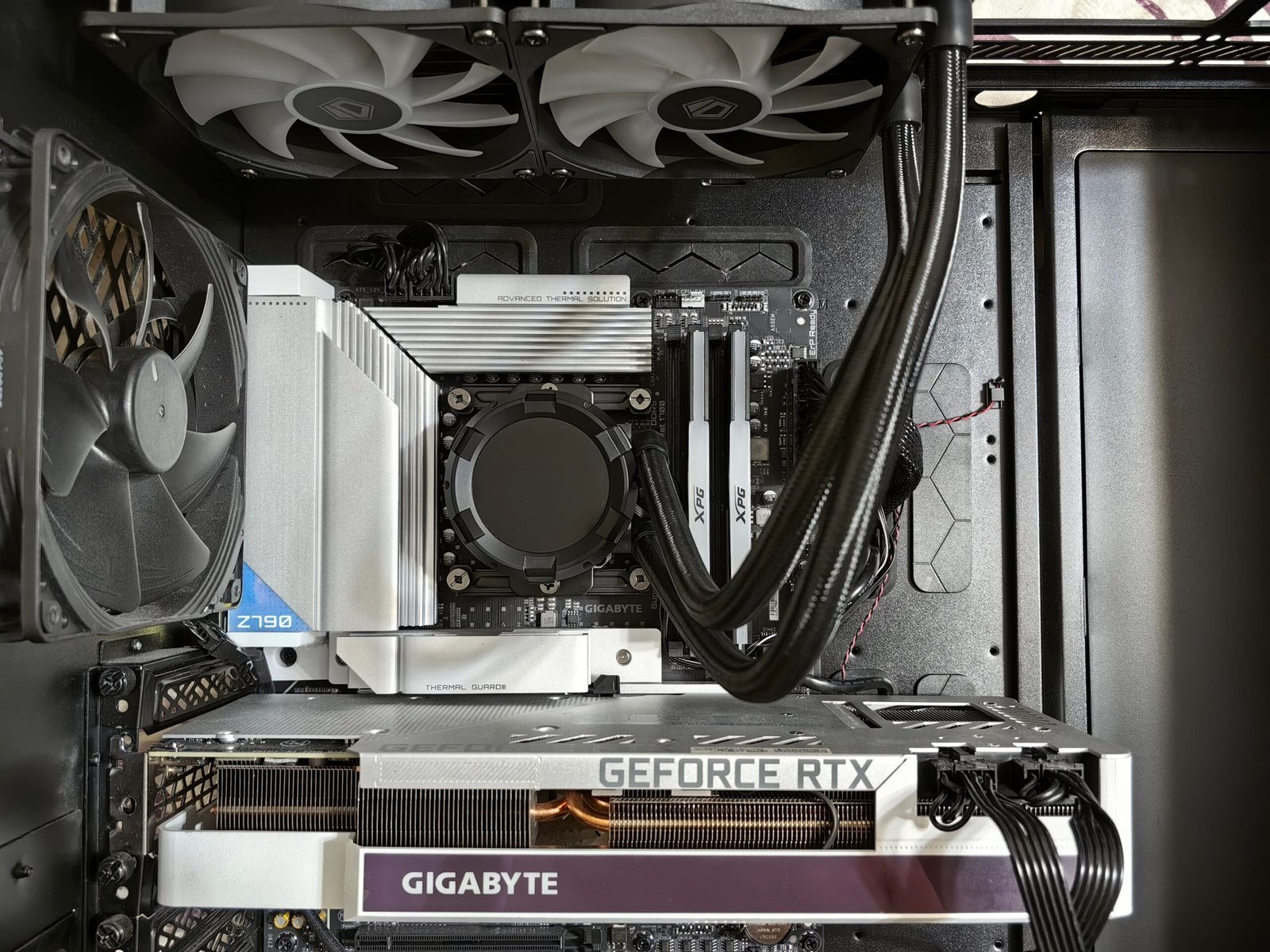
Premium mini-ITX builds have quietly overtaken full towers as the build style everyone wants to talk about. A decade ago, going small meant giving up power. You accepted weaker GPUs, worse airflow, and compromise everywhere. That is no longer true. Today’s premium mini-ITX builds fit full-length graphics cards, serious liquid cooling, and desktop-class performance into a case the size of a shoebox. So it makes sense that more builders are choosing small over big.
In this article, we will explain why premium mini-ITX builds have become so popular, what changed to make them viable, and where full towers still make more sense.
What Makes Premium Mini-ITX Builds Different?
Premium mini-ITX builds are not just small cases with cheap parts crammed inside. They use high-quality materials, smart internal layouts, and components engineered specifically for tight spaces. Cases like the Fractal Design Terra pair sustainably sourced walnut wood with anodized aluminum panels. The result looks more like furniture than a computer.
This matters because mini-ITX motherboards only offer two RAM slots and a single PCIe x16 slot. Full ATX boards offer far more expansion. Yet premium mini-ITX builds compensate with smarter engineering rather than raw slot count, and most builders never miss the extra room.
Why Premium Mini-ITX Builds Are Gaining So Much Ground
GPUs No Longer Force a Compromise
For years, mini-ITX meant short, underpowered graphics cards. That trade-off is mostly gone now. Most ITX cases released recently support full-length two- or three-slot graphics cards without issue. Even flagship cards like the RTX 5090 can fit, as long as you check clearances first. This single change removed the biggest reason people once avoided small builds.
Desk Space and Aesthetics Matter More Than Ever
Home offices and living room setups have pushed compact builds into the spotlight. A full-size ATX tower looks like overkill if you are gaming on a single monitor with one GPU. Premium mini-ITX builds solve that problem directly. They deliver serious performance while sitting quietly on a desk or shelf instead of dominating a room.
Thermal Engineering Finally Caught Up
Small cases used to run hot, and that reputation stuck around longer than it deserved. Modern mini-ITX builds use dual-chamber layouts, mesh panels, and carefully placed intake fans to solve this. Some cases now support radiators up to 240mm, which was unheard of in compact cases just a few years ago. As a result, thermal performance is no longer the dealbreaker it once was.
Do Premium Mini-ITX Builds Cost More Than Full Towers?
Generally, yes, and that is worth being upfront about. Premium mini-ITX cases with better materials and features like sound dampening typically run $120 to $200. Full towers can offer similar quality for less, simply because they have more room to work with. However, many builders happily pay the premium for the space savings and aesthetics alone, especially for LAN parties or living room setups where portability actually matters.
When a Full Tower Still Makes More Sense
Premium mini-ITX are not the right choice for everyone. If you need multiple GPUs, extensive PCIe expansion, or extreme overclocking headroom, a full tower remains the more practical option. Mini-ITX simply cannot match that level of expansion, no matter how well-engineered the case is. For single-GPU gaming and everyday productivity, though, small form factor builds now hold their own.
Pairing Your Build With the Rest of Your Setup
A great case is only part of a satisfying build experience. If tool-free convenience and thoughtful engineering appeal to you here, the same philosophy is spreading elsewhere too. Our guide to modular laptops becoming practical covers how that mindset now extends beyond desktop cases and into laptops you can actually repair and upgrade yourself.
Final Thoughts
Premium mini-ITX builds have earned their popularity the hard way, through real engineering improvements rather than marketing hype. Full-length GPU support, better thermals, and genuinely premium materials have closed the gap with full towers almost completely. You will still pay more for the privilege, and you will still give up some expansion room. For most builders chasing power without the bulk, that trade-off is starting to look like an easy one.