
Quantum-inspired processors are no longer a distant lab curiosity. They already run on standard chips today, and they are quietly reshaping how engineers solve optimization problems that used to take classical hardware hours to crack. Instead of waiting for fragile, cryogenically cooled qubits to mature, a growing number of companies are borrowing the math of quantum mechanics and running it on the silicon we already have. That shift matters, because it means the benefits of quantum thinking are available now, not in 2030.
In this article, we will unpack what these systems actually are, why they are gaining traction so fast, and where the real limits still sit.
What Are Quantum-Inspired Processors?
Put simply, quantum-inspired processors are classical chips — CPUs, GPUs, or custom accelerators — that run algorithms modeled on quantum behavior, such as superposition and probabilistic sampling. They do not use qubits, and they do not need a dilution refrigerator. Instead, they simulate quantum-style problem-solving using standard transistors.
This distinction trips people up constantly. A true quantum computer manipulates physical qubits that exist in genuine superposition. A quantum-inspired system, on the other hand, mimics that behavior mathematically. As a result, it can be deployed on infrastructure that already exists in most data centers, which is exactly why adoption is moving so quickly.
Why Quantum-Inspired Processors Are Gaining Momentum
From Quantum Theory to Classical Silicon
Engineers translate quantum concepts — like exploring many possible solutions in parallel — into probability distributions and ensemble methods that a GPU can execute directly. Because these operations map cleanly onto matrix math, they run efficiently on the parallel architecture that GPUs already provide. Consequently, teams get a taste of quantum-style optimization without touching exotic hardware.
Real-World Performance Gains
Independent benchmarks suggest that quantum-inspired methods can solve tough combinatorial optimization problems dramatically faster than traditional solvers when tuned correctly for GPU execution. That kind of speedup is attractive for aerospace routing, logistics scheduling, portfolio modeling, and chip design itself, and it explains why budgets are shifting toward this approach rather than waiting on fault-tolerant quantum hardware.
Who Is Building Quantum-Inspired Processors Today
A handful of companies now treat quantum-inspired computing as a commercial product rather than a research paper. Firms such as D-Wave blend annealing-style optimization with classical infrastructure — the company now builds gate-model quantum hardware as well, following its acquisition of Quantum Circuits Inc. — while specialist vendors sell quantum-inspired software layers that plug directly into existing engineering pipelines. Meanwhile, larger players like IBM continue to push physical quantum hardware forward, which indirectly accelerates quantum-inspired research by validating which algorithms are worth simulating classically in the first place.
None of this happens in isolation, either. The economics of building the chips that power both camps — classical and quantum — trace back to the same fabrication ecosystem. If you want the underlying cost structure, our breakdown of the economics behind next-generation semiconductor fabs explains why building leading-edge capacity is so expensive, and why that expense shapes which companies can even attempt this kind of hardware race.
Quantum-Inspired Processors vs. True Quantum Computers
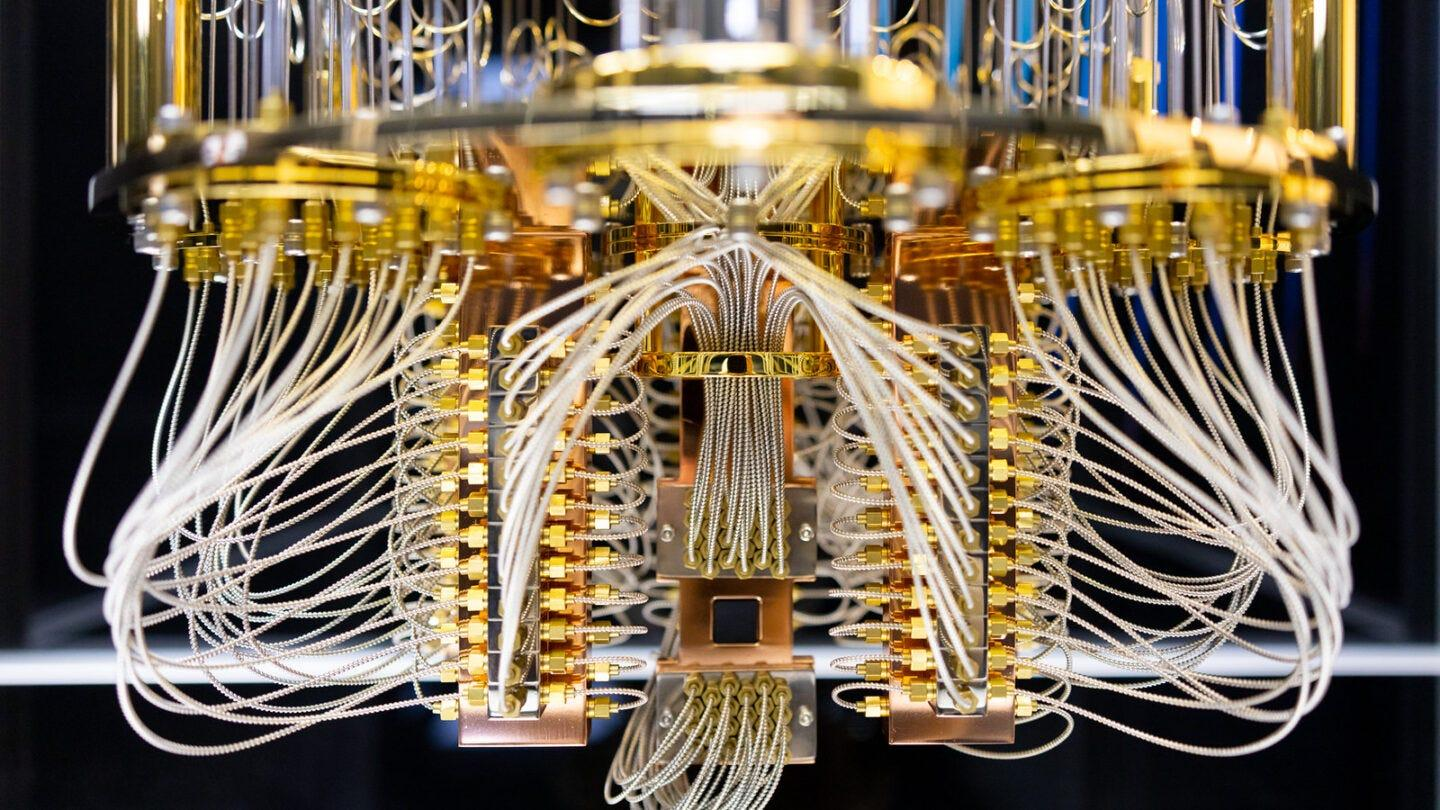
It helps to think of the two paths as parallel tracks rather than competitors. True quantum hardware, such as IBM’s Nighthawk processor, is racing toward fault tolerance through better qubit connectivity and error correction. Quantum-inspired processors, by contrast, are already production-ready because they run on infrastructure teams already own. So the practical question for most businesses is not “which is better,” but “which is ready for my problem today.” For the vast majority of near-term optimization work, the answer is the classical, quantum-inspired route.
Challenges Still Facing Quantum-Inspired Processors
These systems are not a free lunch, however. Because they simulate quantum behavior rather than exploit it directly, they cannot access the exponential speedups that a fault-tolerant quantum computer might eventually deliver for specific problem classes. Power consumption also climbs quickly at scale, since large GPU clusters are not exactly efficient. And integrating these tools into legacy engineering pipelines still takes real software work, even when the hardware itself is familiar.
Final Thoughts
Quantum-inspired processors sit in a genuinely useful middle ground: close enough to real quantum thinking to unlock meaningful speedups, yet practical enough to deploy on hardware that already exists. As fabrication costs keep climbing and true quantum computers keep maturing slowly, expect quantum-inspired approaches to remain the fastest path from quantum theory to production value for years to come.