
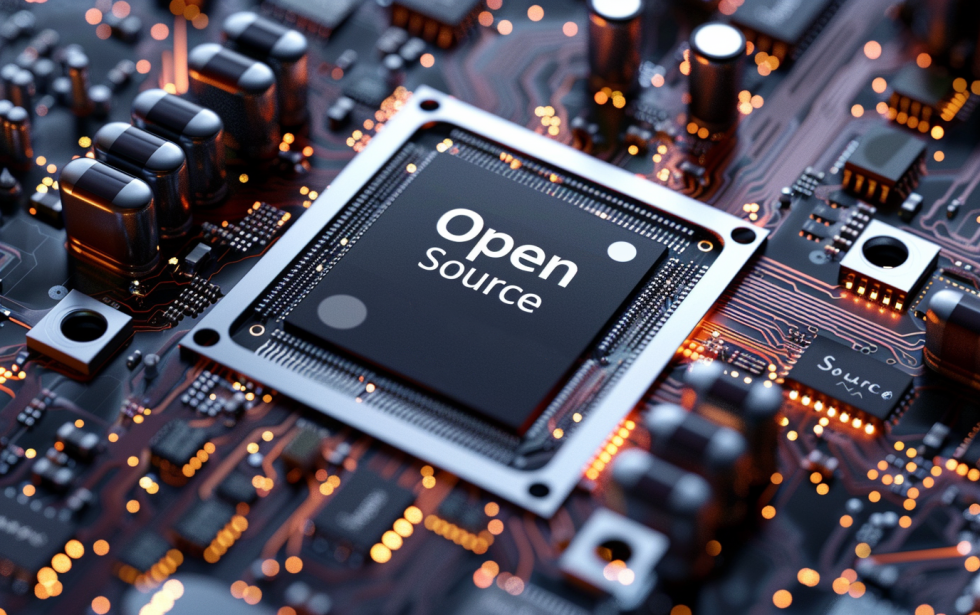
For decades, processor development was controlled by a small number of companies that owned proprietary chip architectures and charged licensing fees for their use.Open chip architectures are giving engineers, startups, research institutions, and governments the freedom to design and build processors without relying entirely on proprietary ecosystems.
This shift is doing for hardware what open-source software did for operating systems and cloud computing. The result is faster innovation, lower development costs, improved security, and a more competitive semiconductor industry.
As artificial intelligence, edge computing, robotics, and Internet of Things devices continue to grow, open chip architectures are becoming one of the strongest forces shaping the future of computing.
Understanding the Shift Toward Open Chip Architectures
The demand for specialized processors has never been higher. Modern applications require chips optimized for machine learning, cloud infrastructure, autonomous vehicles, industrial automation, and low-power embedded systems. Traditional processor architectures were largely designed for general-purpose computing, making them less flexible for many emerging workloads.
This shift is doing for hardware what open-source software did for operating systems and cloud computing. Instead of being limited by closed standards, developers can now access processor specifications, customize them for specific applications, and collaborate with a global community of hardware designers. As a result, the industry is seeing faster innovation, lower development costs, improved security, and a more competitive semiconductor industry.
Consequently, This flexibility is lowering the barriers to entry for semiconductor development and enabling innovation across organizations of every size—from university laboratories and small startups to global technology companies.
What Are Open Chip Architectures?
An open chip architecture is a processor architecture whose technical specifications are publicly available. Developers can study, modify, implement, and optimize the design without paying traditional licensing fees or requesting permission from a proprietary vendor.
Engineers can build processors for embedded devices, networking equipment, industrial systems, AI accelerators, consumer electronics, and many other applications using a shared architectural foundation.
- Transparency: Complete technical documentation is available to everyone.
- Customization: Developers can adapt the architecture for unique workloads.
- Community Collaboration: Engineers around the world contribute improvements and extensions.
- Interoperability: Open standards improve compatibility across hardware ecosystems.
The difference between open and proprietary architectures is substantial. Traditional processor designs often require expensive licensing agreements and impose restrictions on modification and implementation. Open architectures remove many of these limitations, giving organizations far greater control over their hardware strategy.
The Rise of RISC-V
Among all open hardware initiatives, RISC-V has become the most influential and widely adopted open instruction set architecture (ISA). Originally developed at the University of California, Berkeley, RISC-V provides a modular and extensible processor architecture that anyone can implement.
Its modular design allows developers to implement only the instructions required for a particular application, making processors more efficient and easier to optimize.
RISC-V has gained momentum for several reasons:
- Its instruction set is relatively compact and extensible.
- Organizations avoid many traditional royalty and licensing fees.
- A rapidly growing ecosystem supports software tools, operating systems, compilers, and hardware implementations.
- Developers can create highly specialized processors for AI, networking, automotive, and embedded applications.
As more companies adopt RISC-V, the ecosystem becomes increasingly mature, making it easier for new organizations to develop competitive hardware products.
Key Benefits of Open Chip Architectures
One of the most significant advantages of open architectures is the ability to accelerate development cycles. Traditional chip development can take several years and require enormous financial investment. Open architectures provide ready-to-use specifications, reference implementations, and community-supported development tools, allowing engineering teams to begin designing processors immediately.
Additionally, Another major benefit is reduced vendor lock-in. Proprietary hardware ecosystems often force organizations to depend on a single supplier for updates, compatibility, and future product development. Open architectures provide much greater flexibility. Companies can choose different manufacturing partners, customize processor implementations, and maintain long-term control over their technology strategy.
Universities, startups, semiconductor companies, and independent developers can work together on processor designs, software tools, performance optimizations, and security improvements.
Furthermore, Security is another important advantage. Because open hardware specifications are publicly available, thousands of engineers and researchers can analyze processor designs and identify vulnerabilities. This transparency-driven approach can lead to more robust and trustworthy hardware platforms than systems reviewed by only a limited number of engineers.
How Open Architectures Drive Innovation
Open chip architectures are having a profound impact on several rapidly growing technology sectors.
Artificial Intelligence and Edge Computing
Open architectures allow organizations to design custom AI accelerators and low-power edge processors without depending entirely on proprietary hardware vendors.
This flexibility enables startups and research teams to experiment with new hardware concepts, optimize performance for specific machine-learning models, and bring innovative AI solutions to market more quickly.
Academic Research
Universities benefit enormously from unrestricted access to modern processor architectures. Students and researchers can study processor design, develop new optimization techniques, create security extensions, and prototype innovative hardware ideas without expensive licensing barriers.
This accelerates the transition of research breakthroughs into commercial semiconductor products and helps train the next generation of hardware engineers. read more Universal Chip Interconnects: The Future of Modular Computing .
Government and Strategic Technology
Governments around the world are investing in domestic semiconductor capabilities to improve technological independence and strengthen supply-chain security. Open chip architectures provide a transparent foundation for defense systems, secure infrastructure, national research programs, and locally manufactured processors.
By reducing dependence on foreign proprietary technologies, countries can develop more resilient and strategically independent hardware ecosystems.
Challenges and Opportunities
However, Despite their advantages, open chip architectures are not without challenges. Designing a high-performance processor still requires significant expertise in processor architecture, verification, semiconductor manufacturing, and software optimization. Open specifications alone do not guarantee a successful product.
Multiple open architectures and implementation strategies currently exist, which can lead to fragmentation. Industry organizations and research communities are actively working to improve compatibility and establish common standards across hardware platforms.
The Future of Chip Design
The future of semiconductor innovation is increasingly defined by openness, customization, and collaboration. Several trends are likely to accelerate the adoption of open chip architectures over the coming years.
Moreover, Artificial intelligence will continue to drive demand for specialized hardware accelerators. Open architectures allow researchers and engineers to prototype new AI processors rapidly, experiment with custom instruction sets, and optimize silicon for specific neural-network workloads.
Finally, Sustainability is also becoming a major priority across data centers, mobile devices, industrial systems, and embedded electronics. Open chip architectures enable highly optimized low-power processors that deliver strong performance while reducing electricity consumption and environmental impact.
The semiconductor industry is experiencing a transformation similar to the open-source software revolution. Just as Linux reshaped operating systems and cloud infrastructure, open chip architectures are reshaping processor design and hardware innovation.
Final Thoughts
Open chip architectures are no longer a niche academic concept—they are becoming a mainstream force in modern semiconductor development.
Overall, Organizations that embrace open architectures gain significant advantages in customization, cost efficiency, security, and technological independence. They can develop processors tailored to their workloads, reduce dependence on proprietary vendors, and participate directly in the next generation of semiconductor innovation.
As artificial intelligence, edge computing, robotics, and sustainable computing continue to evolve, open chip architectures will play an increasingly important role in shaping the future of hardware technology. The next generation of computing is being built on openness, collaboration, and customization—and that future has already begun.