
Processing-in-Memory (PIM): How It Works and Why It Matters
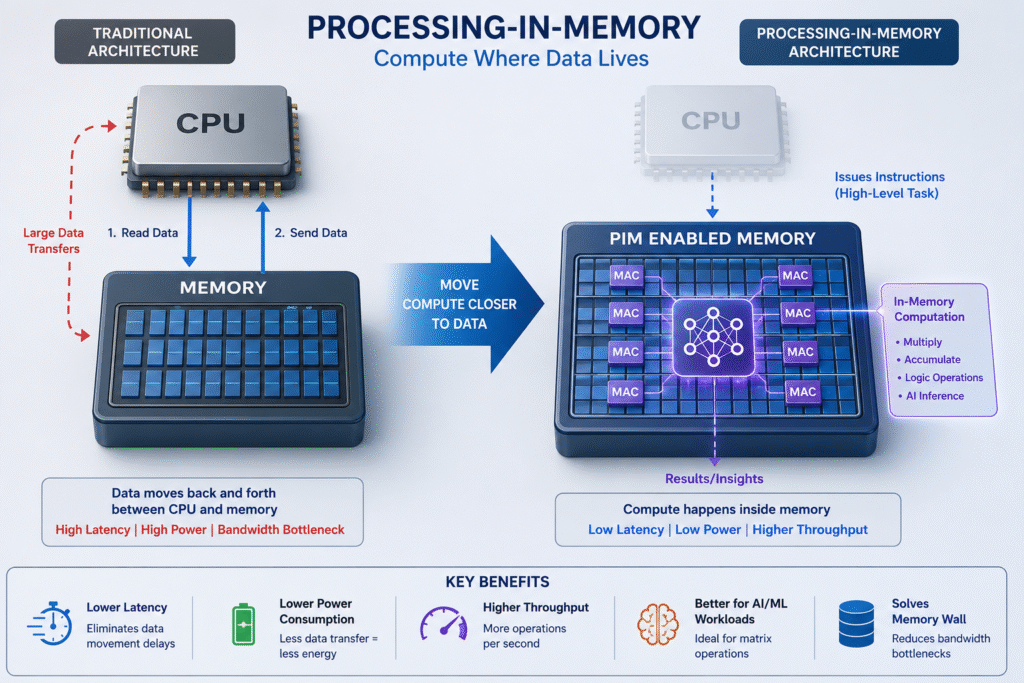
Processing-in-Memory (PIM) offers a new way to solve this long-standing problem. Instead of repeatedly transferring data between memory and the processor, PIM allows certain computations to take place directly inside or very close to the memory itself. By reducing unnecessary data movement, systems can process information faster while consuming less energy. As a result, PIM […]